Rooguy
This case study presents the version of the product I designed and implemented during my involvement. The product has slightly evolved since.
Product overview
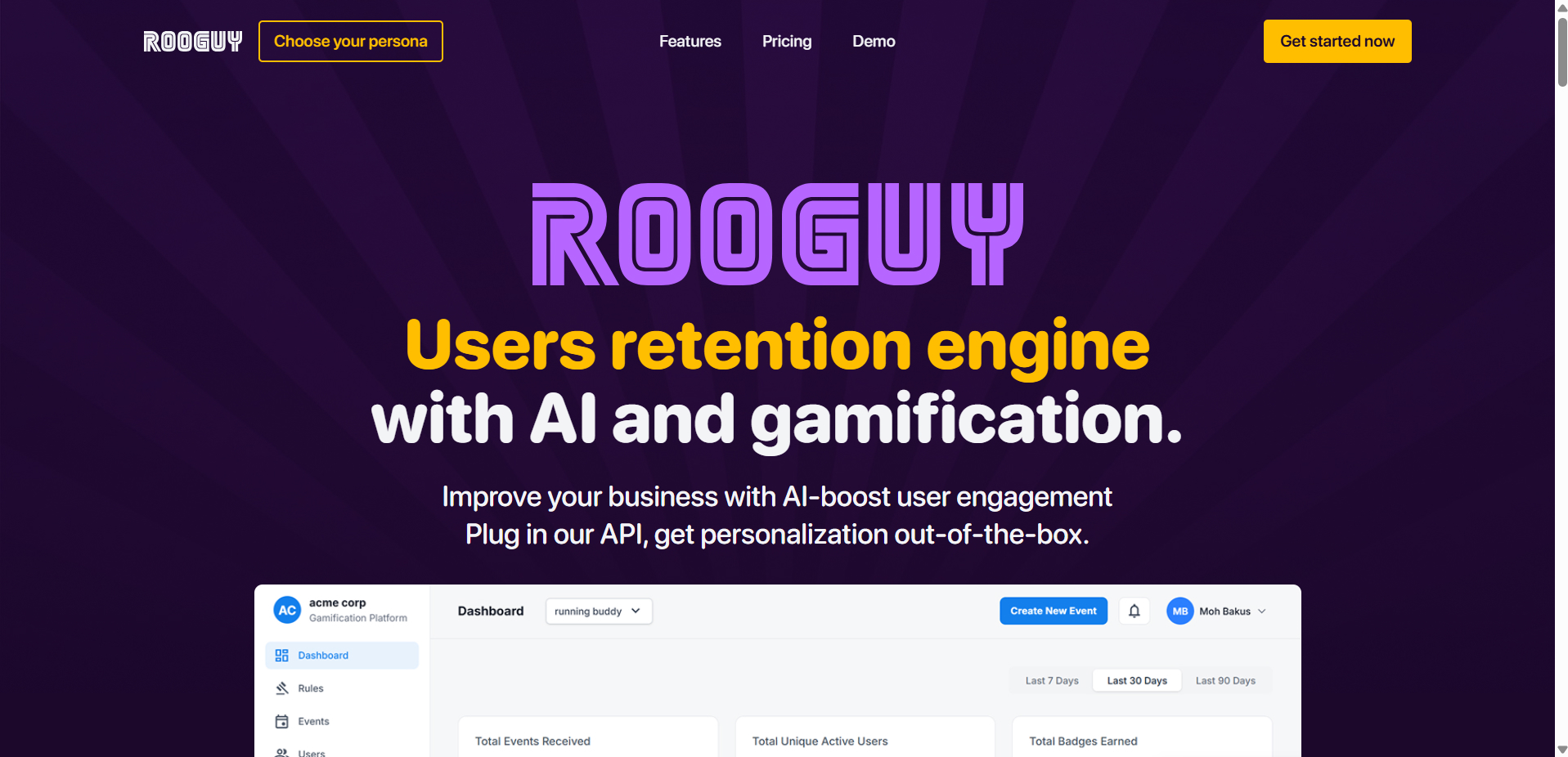
Rooguy is an AI-powered SaaS platform that helps businesses improve user retention through personalized gamification strategies. The project consisted of transforming an early marketing concept into a production-ready platform by creating a clear product identity, redesigning the user experience, and building a lightweight content management system for future growth.
Duration
2 months
Team
Founder + me as Product Designer & Frontend Engineer
Project context
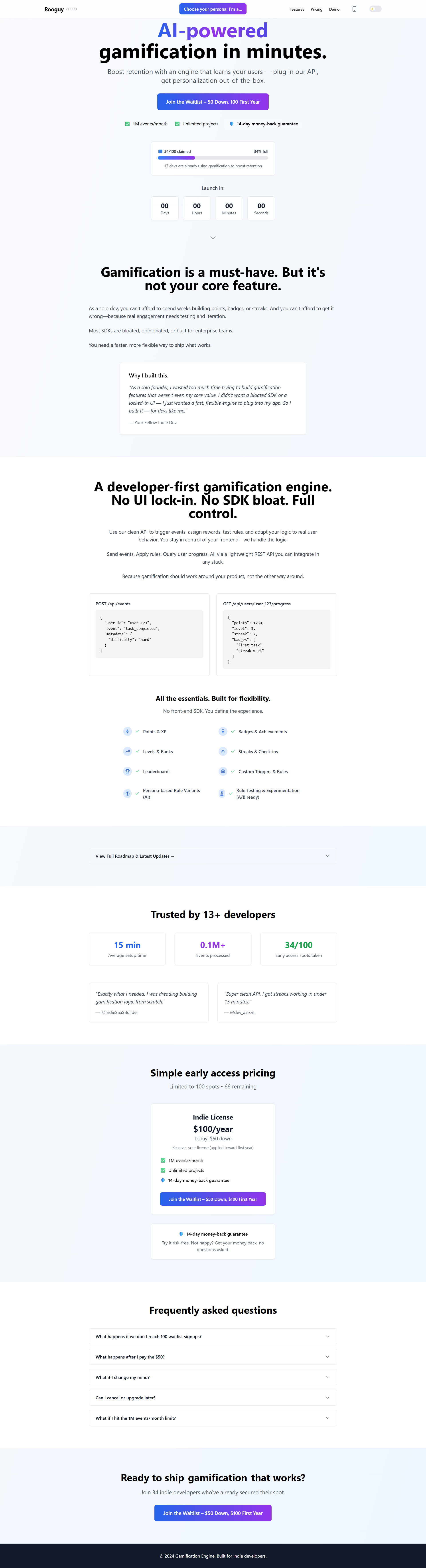
The project began with an AI-generated landing page created by the founder to
quickly visualize the product.
Although it provided an initial direction, it lacked the qualities expected from a SaaS product.
The messaging was unclear, the visual identity was inconsistent, and the website didn't establish
enough credibility to explain a relatively complex concept

The objective wasn't simply to redesign the page. It was to create a marketing platform capable of communicating the product's value, supporting different audiences, and allowing content to evolve over time without requiring developer intervention.
My role
I collaborated directly with the founder throughout the project while a backend engineer developed the administration interface. My responsibilities covered both product design and frontend engineering.
Product design
- Brand identity
- UX strategy
- UI design
- Design system
- Landing page redesign
Frontend engineering
- React implementation
- Component architecture
- CMS integration
- Deployment
The challenge
Rooguy wasn't targeting a single type of user.
The product needed to appeal to founders, product managers, marketers, and technical teams:all
with different expectations and levels of technical knowledge.
At the same time, the content was expected to evolve rapidly as the product matured.
The challenge became twofold:
- communicate a complex AI product in a way every audience could understand
- build a marketing platform that remained easy to maintain despite frequent content updates
Product decisions
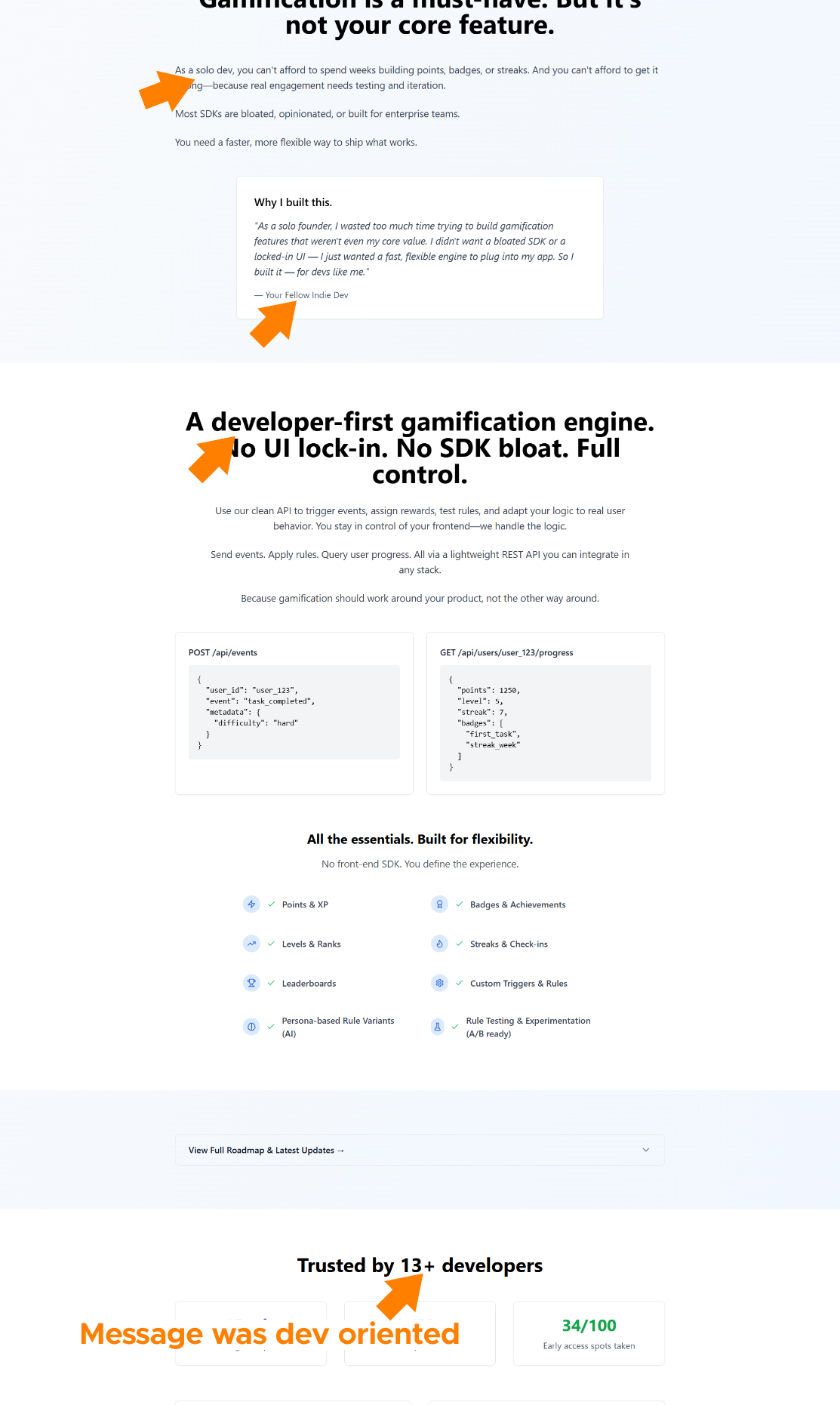
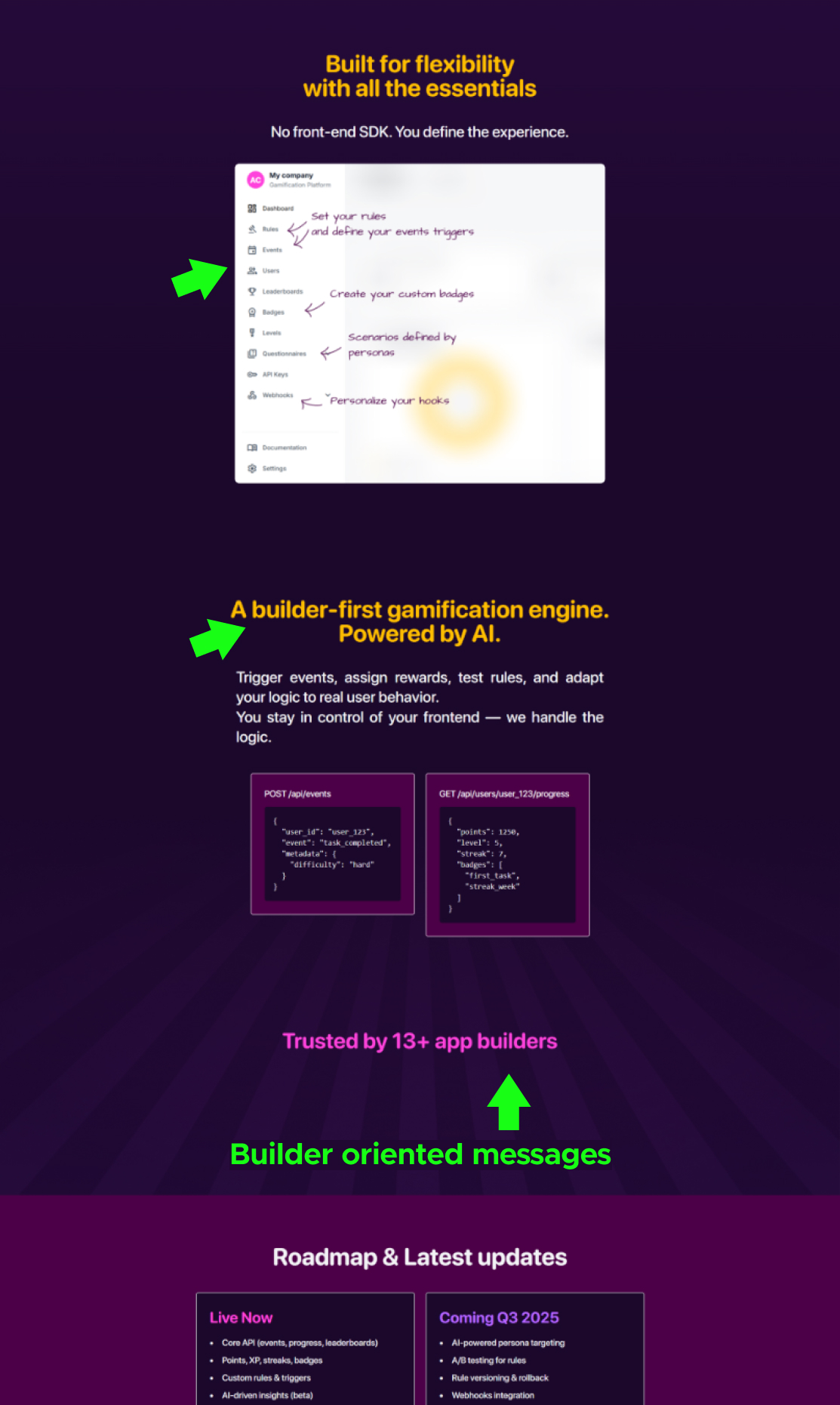
Reframing the product story
During my review of the original landing page, I noticed the messaging
assumed readers already understood gamification and AI. This unintentionally positioned the
product as something primarily intended for developers.
I restructured the experience around the different personas the founder wanted to reach.
Rather than explaining features first, each section focused on the problems Rooguy solved for
a specific audience, making the product easier to understand regardless of technical
background.
Calls to action were integrated throughout the experience to encourage visitors to continue
exploring or get in touch.
Building a recognizable visual identity
The original prototype provided structure but very little personality.
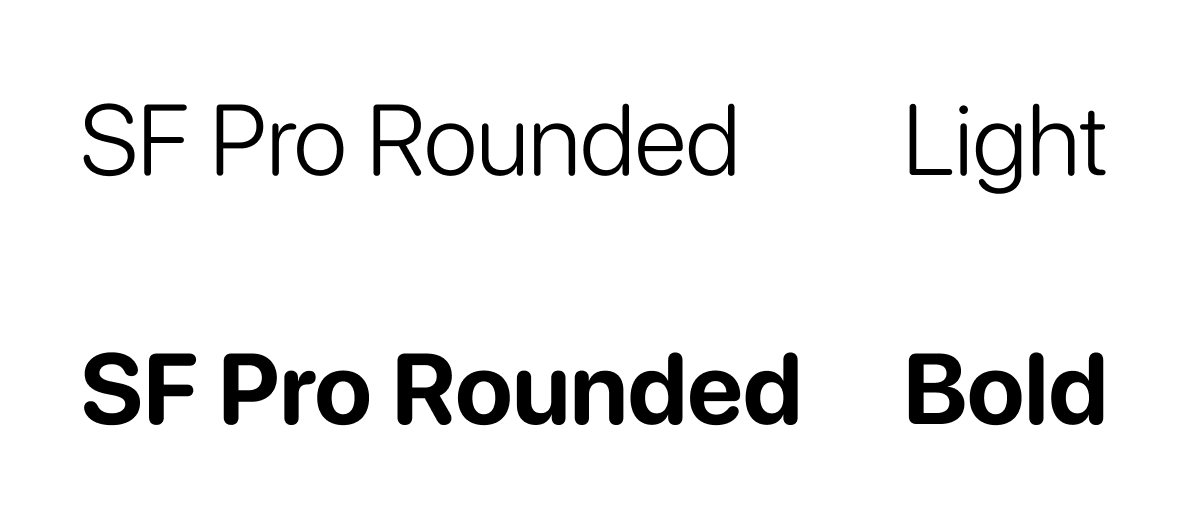
Working from the founder's preferences, I explored visual directions centered around ideas of
achievement, progression, and success while respecting the typography choices already
established for the brand.
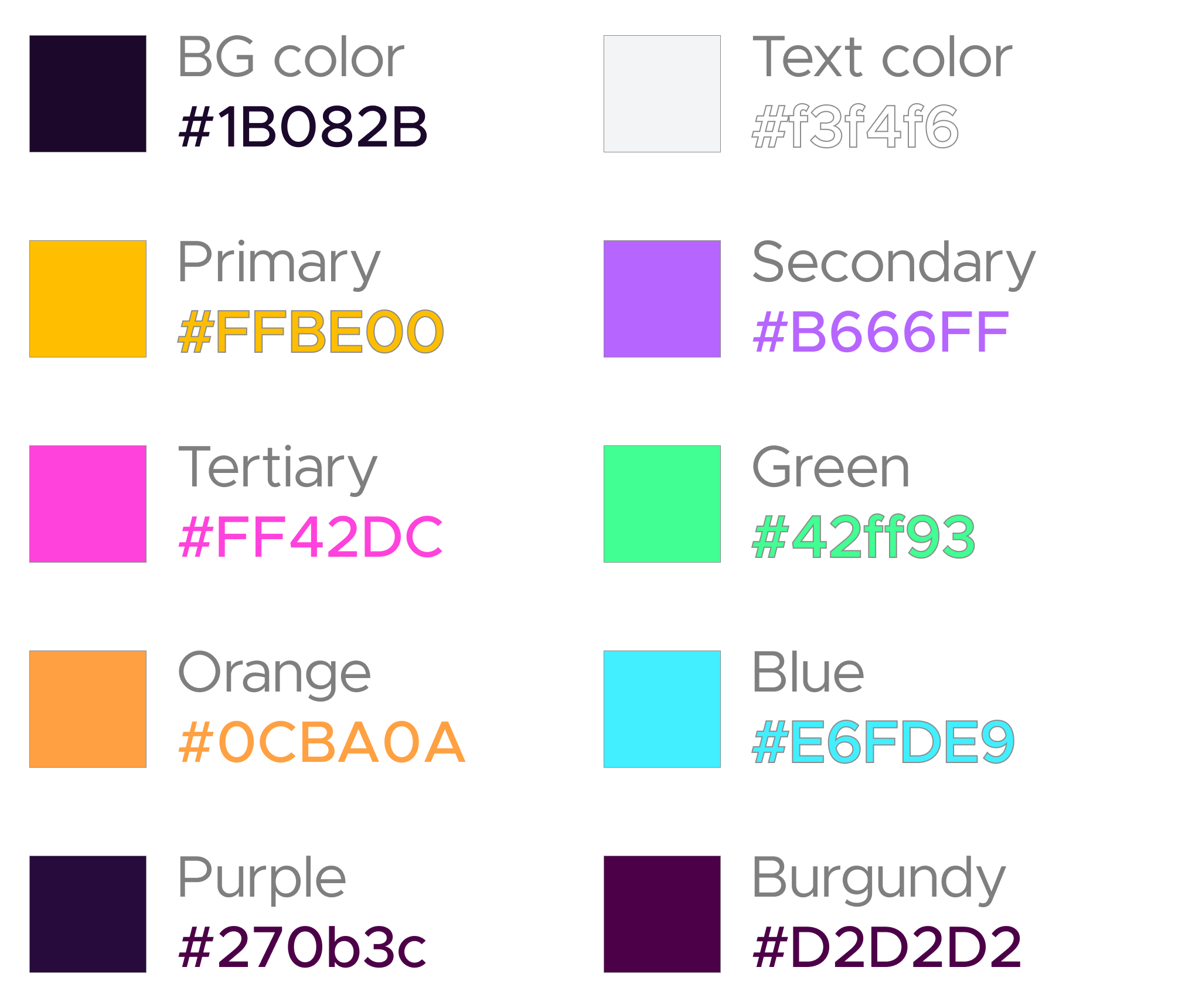
The resulting identity introduced a consistent color palette, stronger visual hierarchy, and
a more credible SaaS aesthetic without losing the product's playful positioning.
Engineering decisions
Designing a scalable frontend
The landing experience needed to support several personas while avoiding
duplicated code.
Rather than creating independent pages for each audience, I decomposed the varying sections
into reusable React components that dynamically displayed different content depending on the
selected persona.
This reduced maintenance effort while keeping the codebase organized and consistent.
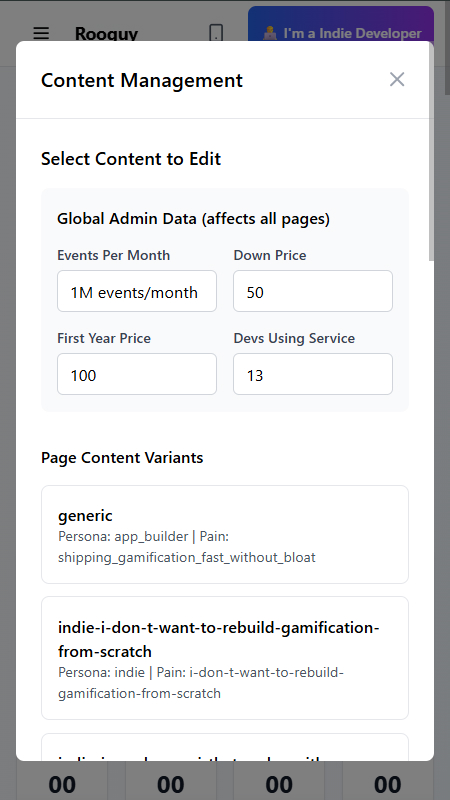
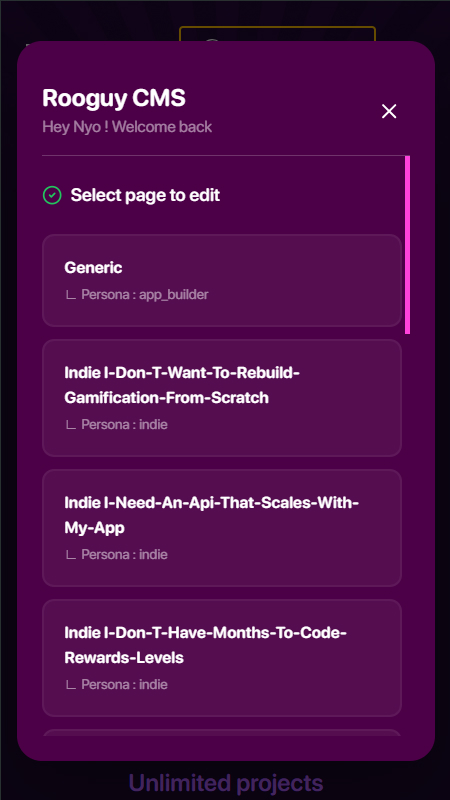
Building a lightweight CMS
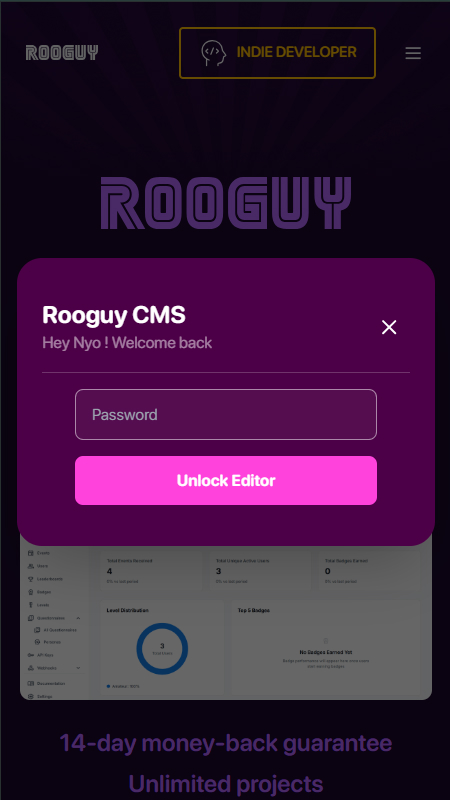
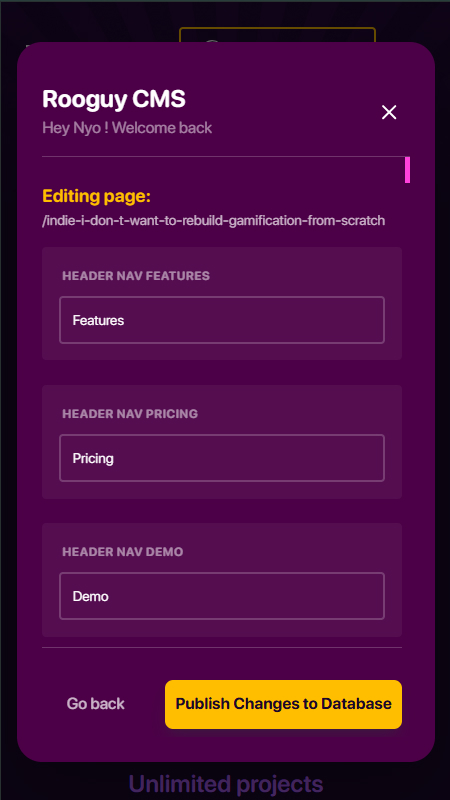
A major objective was allowing the founder to update marketing content
independently. Given the hosting constraints, a traditional CMS wasn't necessarily the best
fit.
Instead, I designed a lightweight solution combining a small PHP API with SQLite, allowing
structured content to be edited without introducing unnecessary complexity.
This approach balanced implementation speed with long-term maintainability.
Architecture
The production environment imposed several technical limitations. Only FTP deployment was available, with no SSH access or advanced server configuration. The final architecture intentionally remained simple.

This solution met the project's immediate needs while remaining straightforward to deploy and maintain.
Technical & product challenges
Scaling content for multiple audiences
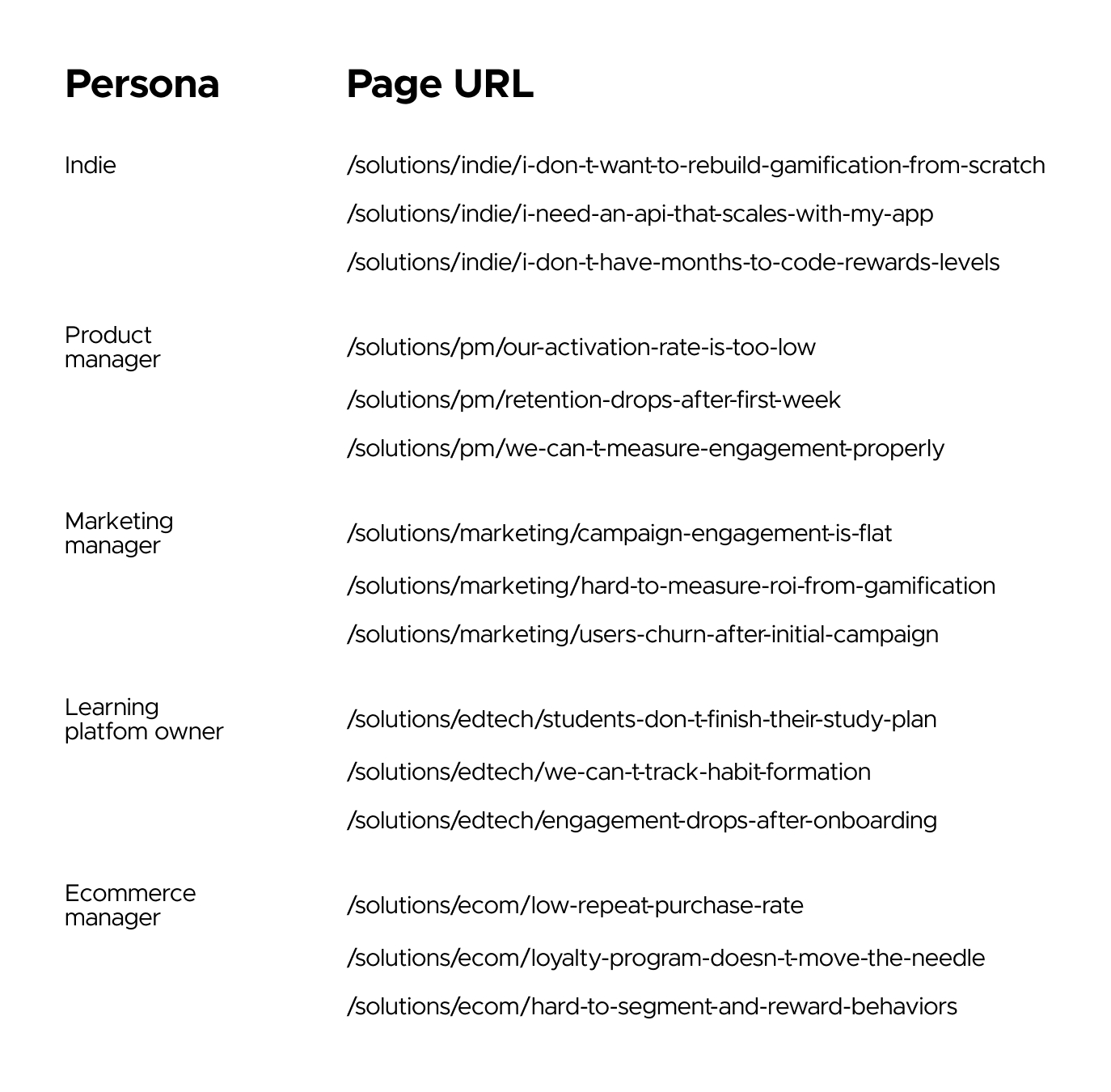
Supporting five personas across several marketing pages introduced dozens of
editable content blocks.
As the amount of content increased, maintaining a single content structure became
increasingly complex.
The challenge wasn't simply storing text:it was designing a content model flexible enough to
support future growth without becoming difficult to manage.
Balancing implementation speed and SEO
Using a React single-page application allowed rapid development, but it also
reduced SEO opportunities because persona-specific content shared a common entry point.
Looking back, dedicated static pages:or server-rendered equivalents:would have provided
better search engine visibility while preserving a maintainable editorial workflow.
This project highlighted the importance of considering SEO architecture as early as the
initial technical decisions.
Outcomes
The project successfully transformed an early concept into a production-ready marketing platform.
Product
- Brand identity established
- Production website delivered in under two months
- Content management system implemented
- Five audience-specific experiences supported
Business
- Stakeholders gained autonomy over content updates
- First inbound leads generated during the first month after launch
Reflection
Rooguy reinforced an important lesson about AI-assisted development.
AI significantly accelerated exploration and implementation, but it didn't replace the need for
architectural planning.
Hosting limitations, SEO strategy, content management, and deployment all influenced decisions
that became difficult to revisit later in the project.
If I approached the project again, I would spend more time validating the long-term technical
architecture before implementation. A stronger SEO strategy and a content model designed around
independently indexable pages would have better supported the product's marketing objectives as
it grew.