NaturecareAI
This case study presents the version of the product I designed and implemented during my involvement. The product has evolved since.
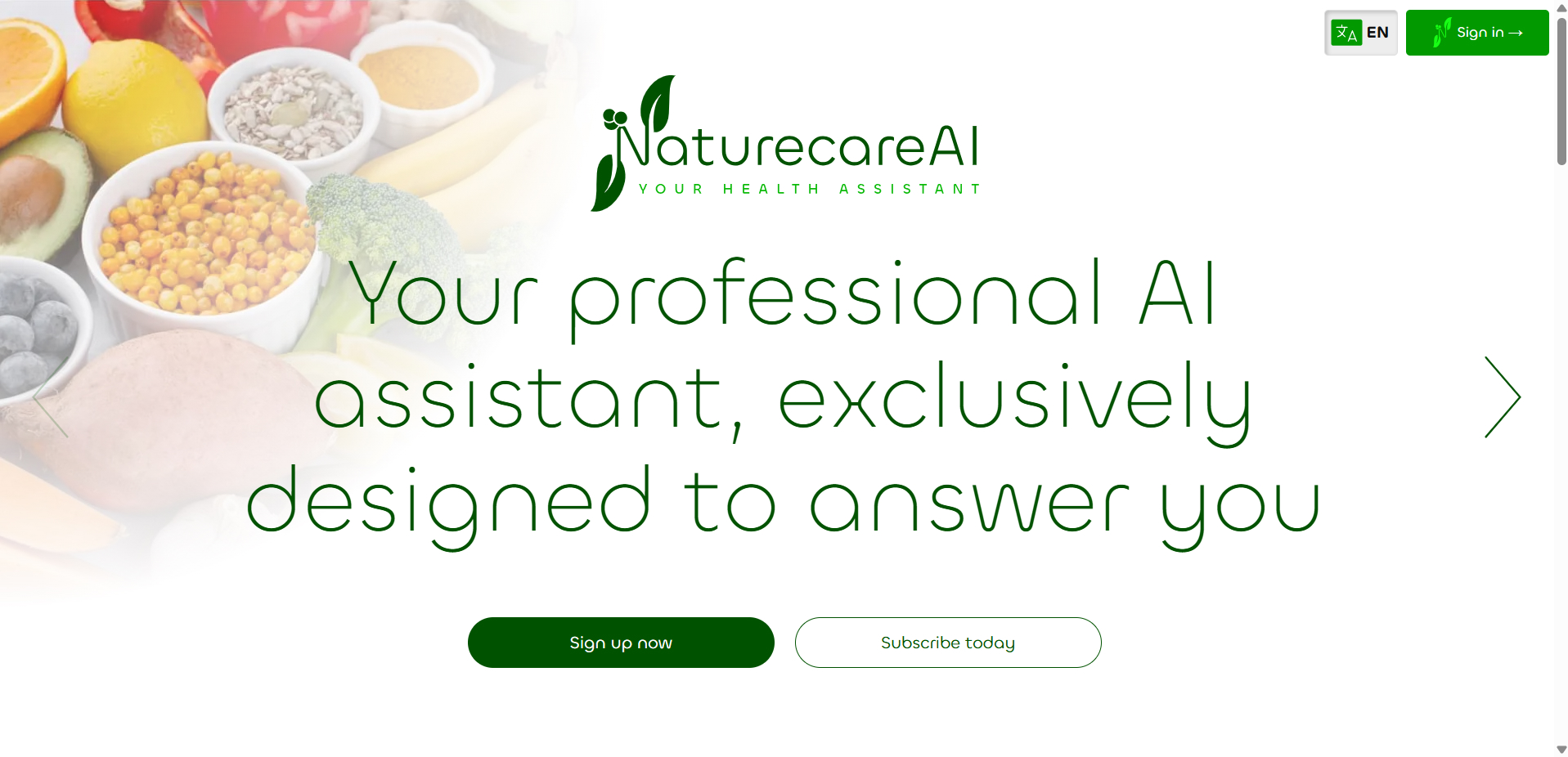
Product overview
NaturecareAI is an AI-powered healthcare assistant that combines conversational AI with a curated knowledge base of natural remedies to provide personalized healthcare recommendations. The product was developed as an MVP to validate whether users would engage with AI-assisted natural healthcare while laying the foundation for a future subscription-based platform.
Duration
10 months
Team
Founder + Technical Coordinator +
myself as Product Designer &
Full-Stack Engineer
Project context
The project began with a simple idea: combine the growing interest in
conversational AI with natural remedy knowledge to create an accessible
healthcare assistant.
Rather than investing heavily in infrastructure or research upfront, the objective was to launch
a lean MVP capable of validating three assumptions:
- Users would trust an AI assistant focused on natural healthcare.
- Remedy and home recipes knowledge would create additional value compared to a generic AI model.
- Users would eventually be willing to subscribe for continued access.
Building trust was particularly important. Healthcare products require reassurance, transparency, and accessible language, making the experience just as important as the technology behind it.
My role
I joined the project during its earliest stage, when only the business concept existed. Working alongside the project owner and a technical coordinator, I was responsible for transforming the vision into a production-ready product.
Product design
- Product naming
- Brand identity
- Information architecture
- Landing page
- Chat experience
- Subscription journey
UI engineering
- Responsive frontend
- Component system
- Chat interface
Full-stack engineering
- Node.js API
- Authentication
- Database design
- AI integration
- Stripe integration
- Mailchimp integration
- VPS deployment
The challenge
Developing the product wasn't simply about building another AI chatbot.
The challenge was balancing three different objectives that often conflicted with each other.
Build trust
Healthcare products need to feel reassuring and approachable. Users needed confidence in the product before sharing personal health questions.
Validate quickly
The project was intentionally developed as an MVP with limited resources. Every technical decision needed to favor speed without compromising the product experience.
Prepare for growth
Although the initial objective was validation, the architecture also needed to support subscriptions, content management, and future product expansion.
Product decisions
Creating two distinct experiences
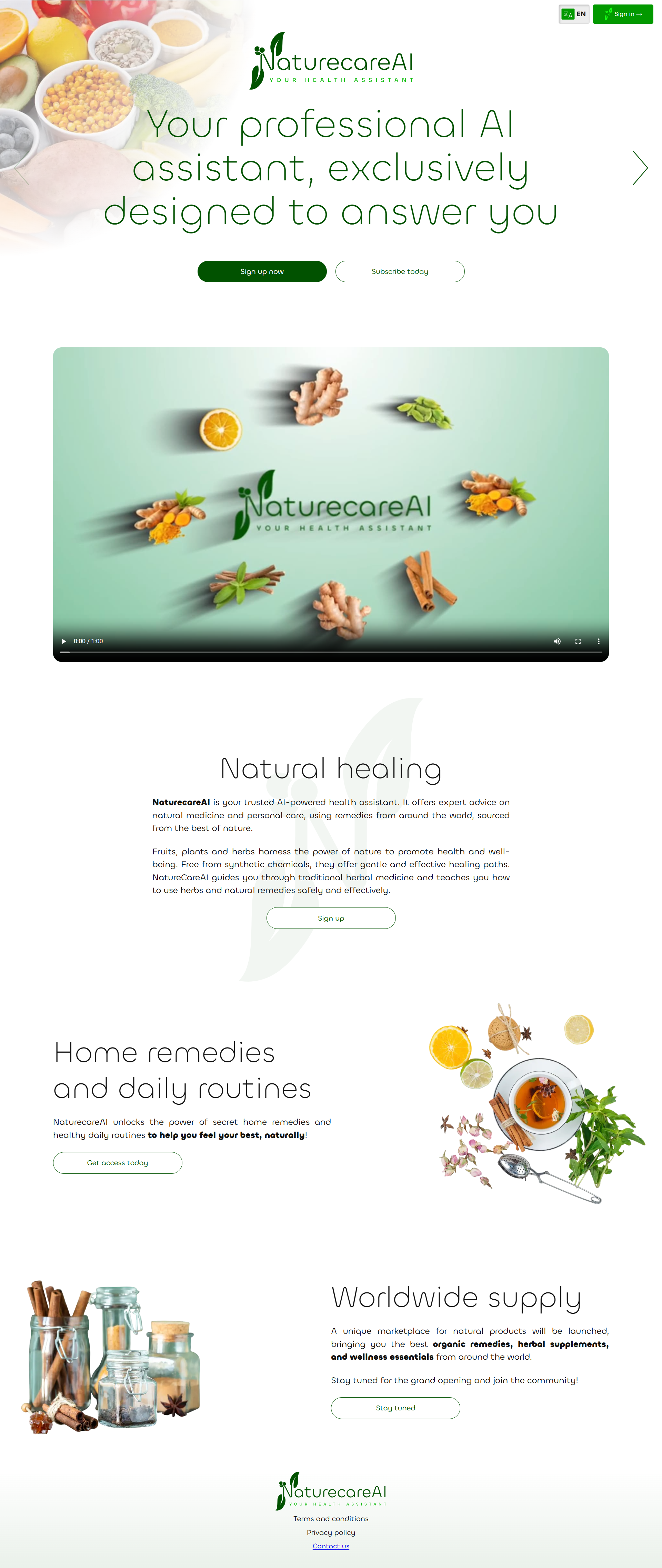
One of the earliest decisions was separating the marketing website from the
application itself.
Rather than immediately asking visitors to create an account, we designed two different entry
points.
Marketing website : the website focused on introducing the product,
explaining the concept, and collecting newsletter subscribers.
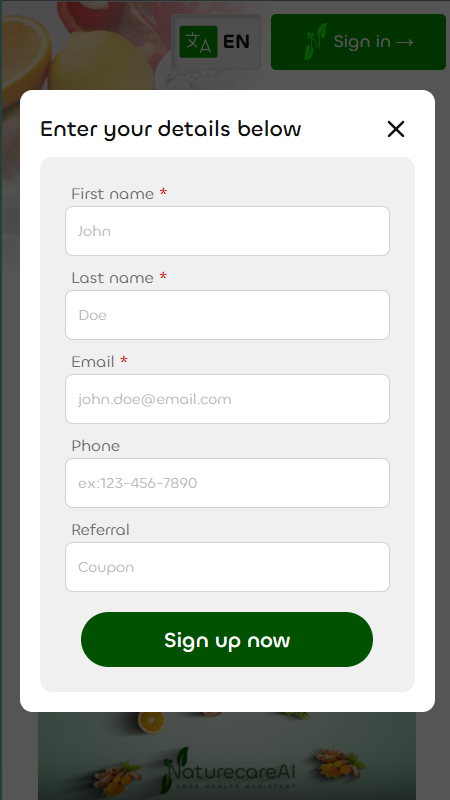
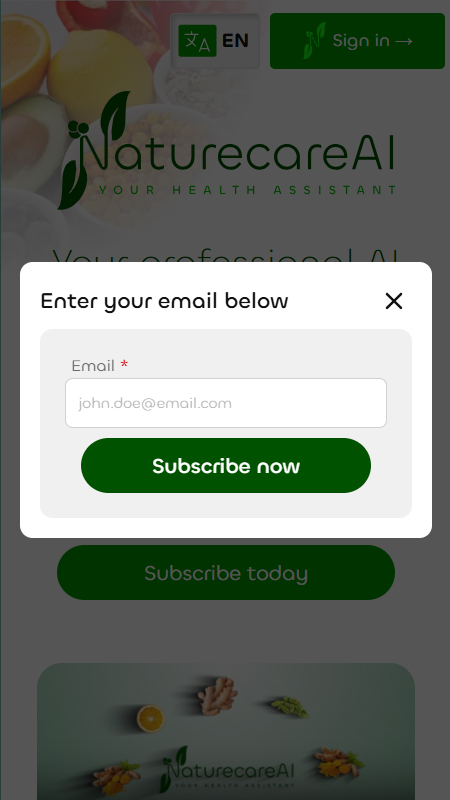
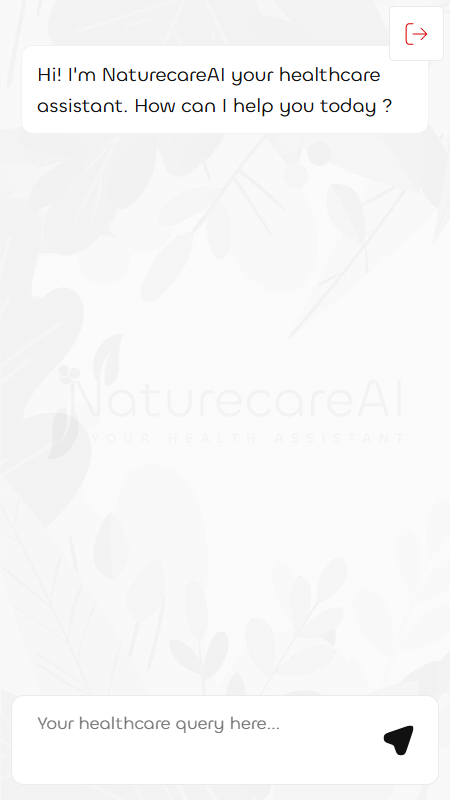
AI platform : the application focused on authenticated users, personalized conversations, and subscriptions.
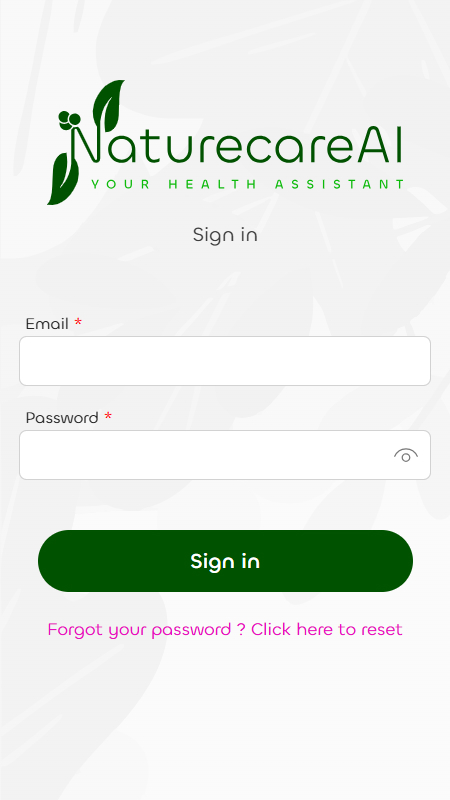
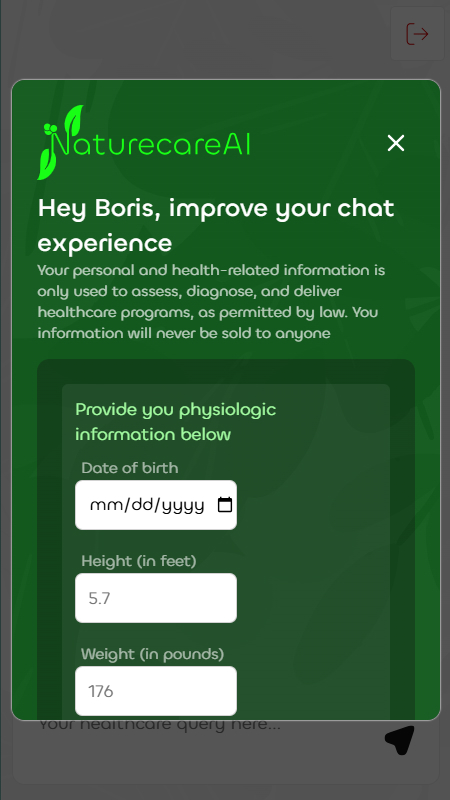
This structure allows us to build an audience before asking users to commit, and then allow early adopters to get their healthcare assistance.
Designing for trust
Online natural healthcare and AI can both generate skepticism.
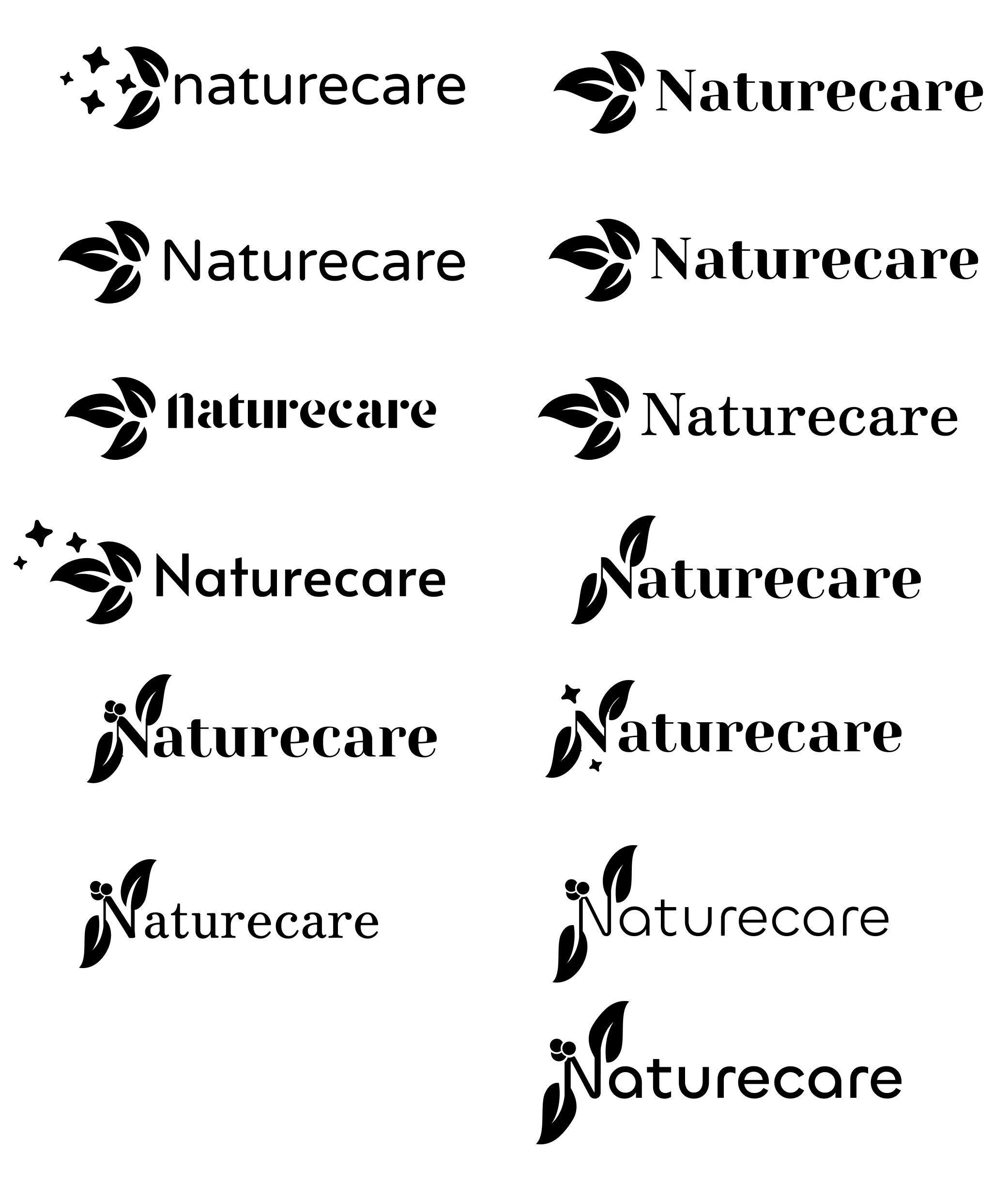
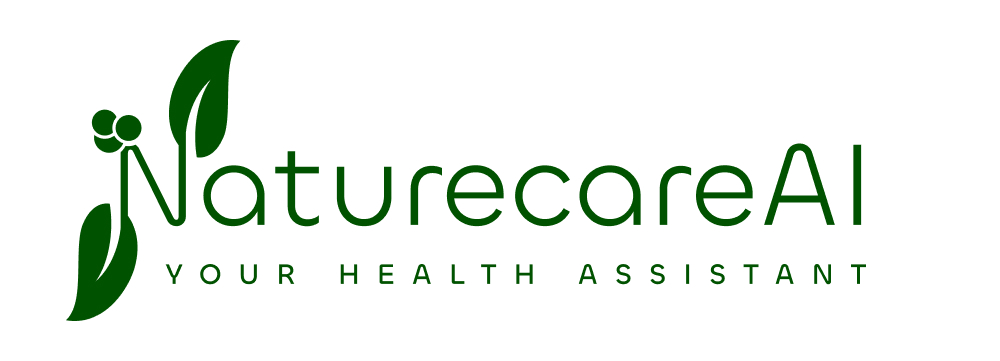
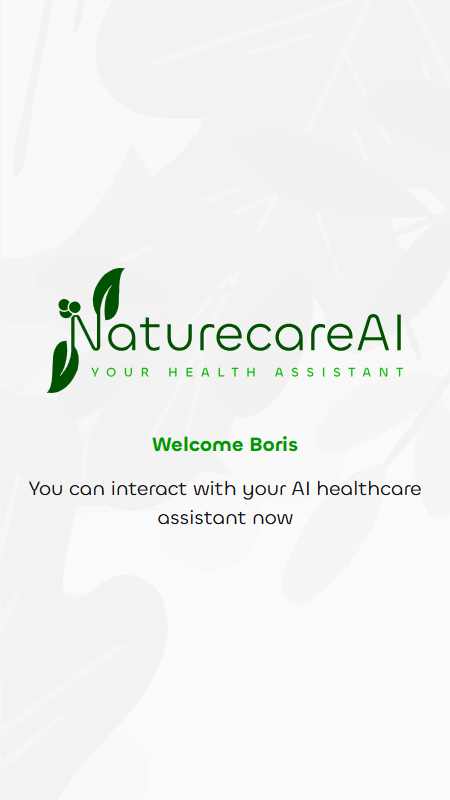
The visual identity intentionally starting with the brand logo moved away from the futuristic
aesthetic common among AI
products.
Instead, I designed an interface centered around:
- green and light tones
- rounded shapes
- simple language
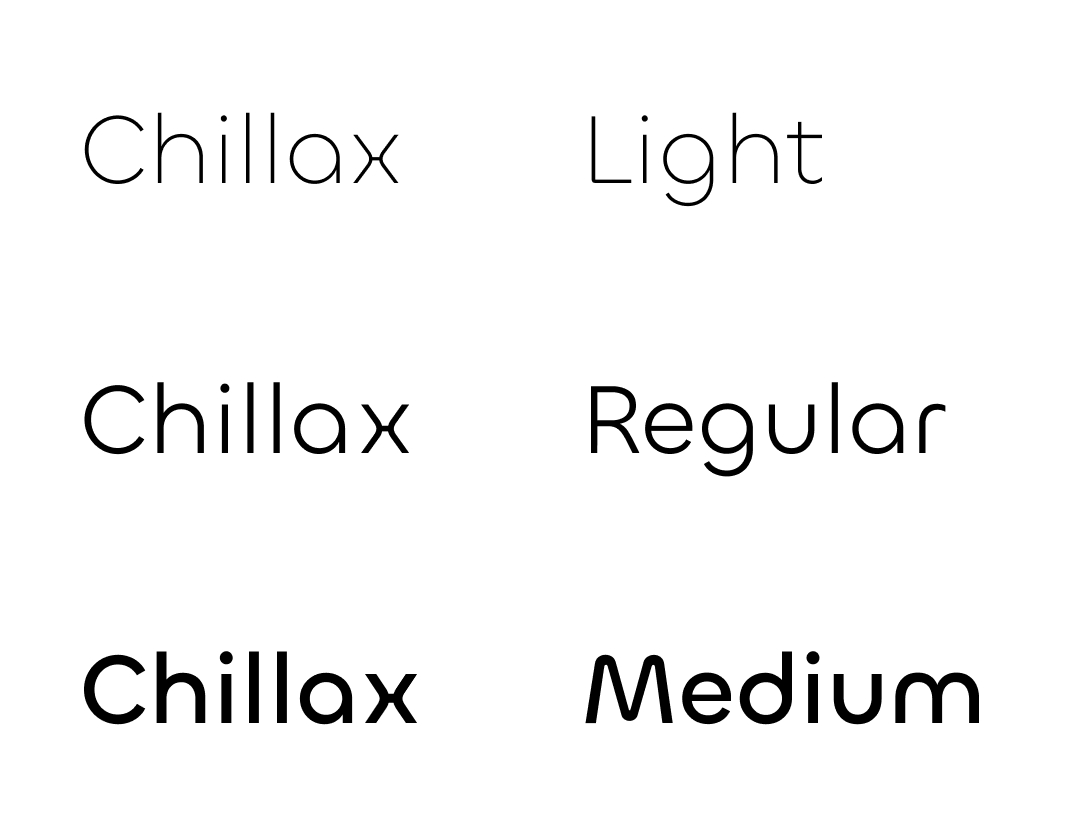
- accessible typography
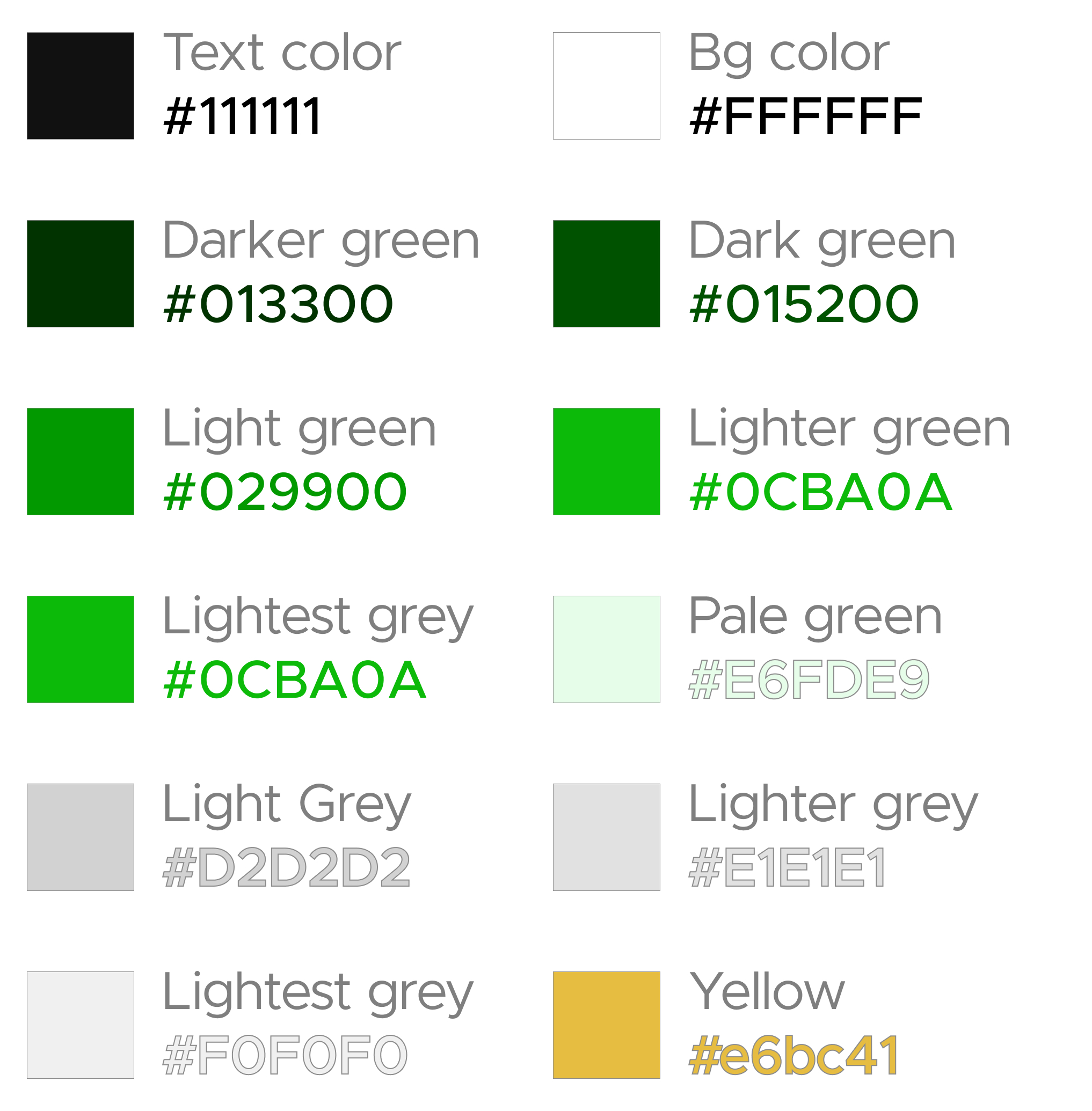
The objective was to make the assistant feel calm, reassuring, and approachable rather than highly technical.
Designing the conversation
The chatbot became the core experience.
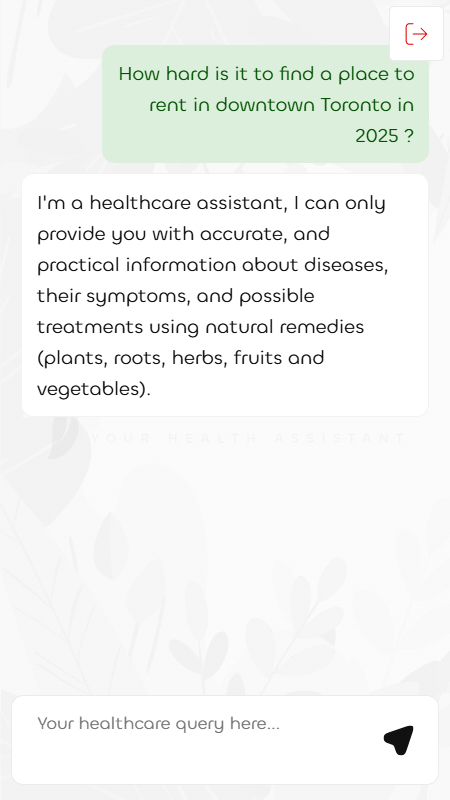
Instead of treating it as a generic chat interface, the interaction was designed around
healthcare conversations.
The interface emphasized:
- clarity over complexity
- persistent conversation history
- minimal distractions
- clear subscription states
- mobile accessibility
Engineering decisions
Because the primary objective was validation, technical choices were guided by rapid delivery and maintainability.
Building the MVP
Rather than developing every service from scratch, I integrated existing platforms wherever possible.
- Authentication with JWT
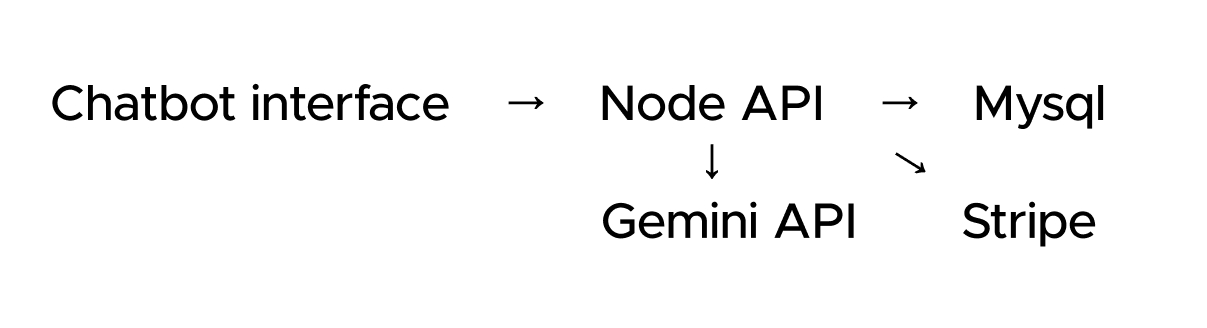
- Payments with Stripe
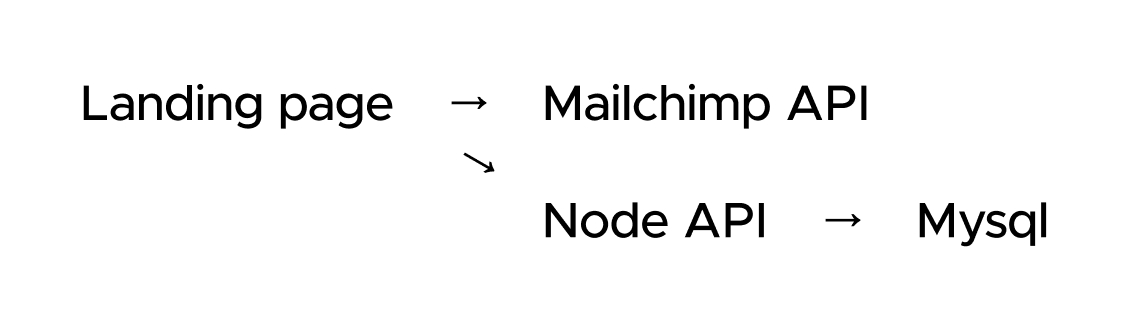
- Newsletter with Mailchimp
- AI integration through an external API
- Data storage with a MySQL database


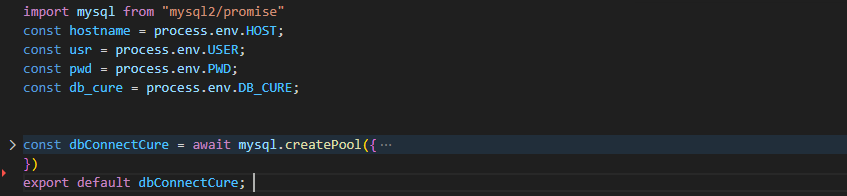
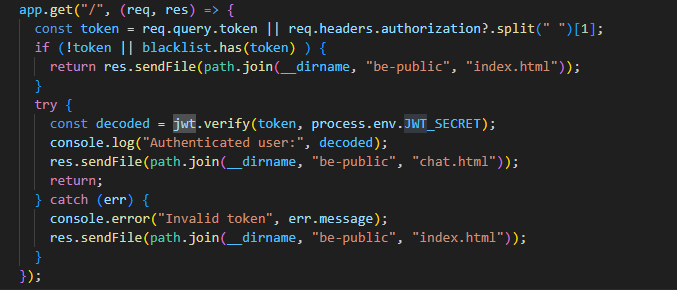
This allowed development time to focus on the product itself instead of supporting infrastructure.

Backend architecture
I chose Node.js to maintain a single JavaScript stack across the frontend and
backend while keeping the API lightweight and easy to iterate on.
MySQL provided a straightforward relational model connecting:
- users
- subscriptions
- conversations
- remedies
- diseases
The marketing website and chatbot platform were deployed separately, allowing each application to evolve independently.
Technical challenges
Preventing AI hallucinations
Because the application provided healthcare recommendations, reducing inaccurate responses
became
a priority.
Each request included system instructions defining the assistant's role, limiting conversations
to natural healthcare topics, and encouraging source verification whenever appropriate.
The trade-off was a more restrictive assistant, but one that produced more consistent and
trustworthy responses.
Protecting user privacy
Understanding early adopters was important for the business, but personal user information could
not be shared with the language model.
The backend separated account information from AI conversations, ensuring only the required
conversational context reached the model.
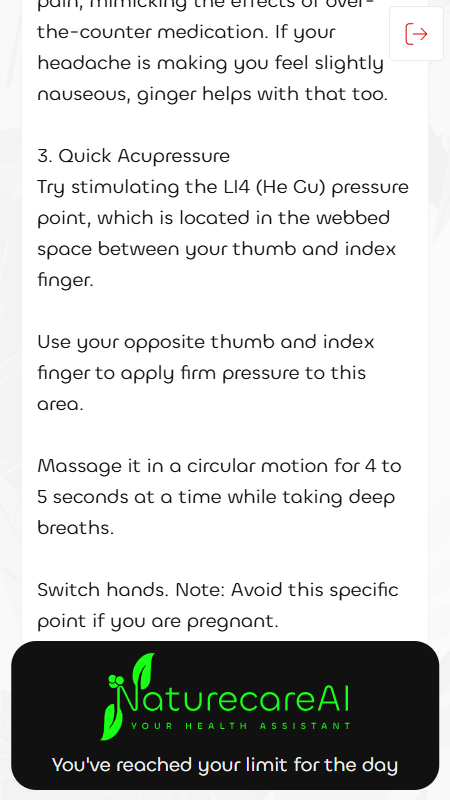
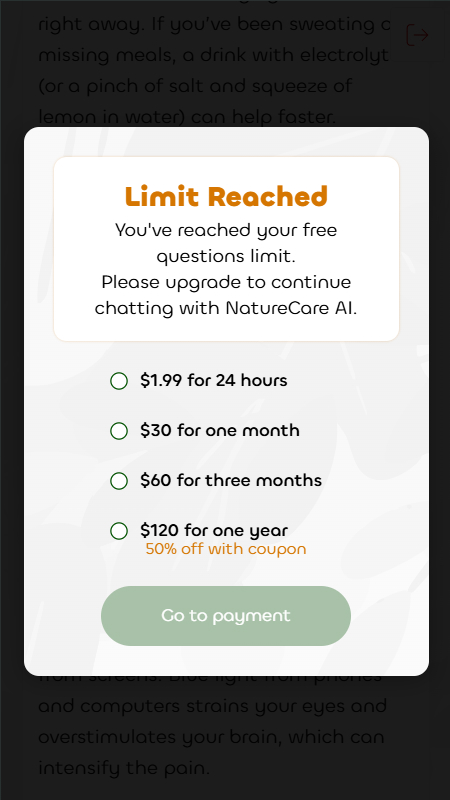
Balancing free access and monetization
AI requests generated operational costs.
To limit expenses, the initial MVP restricted users to fewer than five conversations per day
before requiring a subscription.
Although financially safe, this decision ultimately limited users' ability to fully experience
the product.
Outcomes
The MVP successfully validated technical feasibility and demonstrated genuine user interest.
Product
- MVP launched successfully
- AI assistant deployed
- Newsletter integrated
- Subscription system completed
Metrics
- 300 newsletter subscribers
- AI interactions successfully validated
- 0.3% paid conversion
Although engagement met expectations, conversion remained significantly below our objective. Looking back, the early paywall created friction before users had experienced enough value to justify subscribing.
Reflection
NaturecareAI taught me that product validation isn't only about launching quickly:it
is also about giving users enough opportunity to experience the product before asking for
commitment.
Technically, the project expanded my experience beyond frontend development into API design,
authentication, data modeling, AI integration, and deployment.
From a product perspective, my biggest lesson was that reducing friction often creates more learning
than protecting monetization too early. If I were iterating on the product today, I would replace
the strict query limit with a free trial, collect qualitative feedback after conversations, and
experiment with progressive personalization before introducing a subscription.